
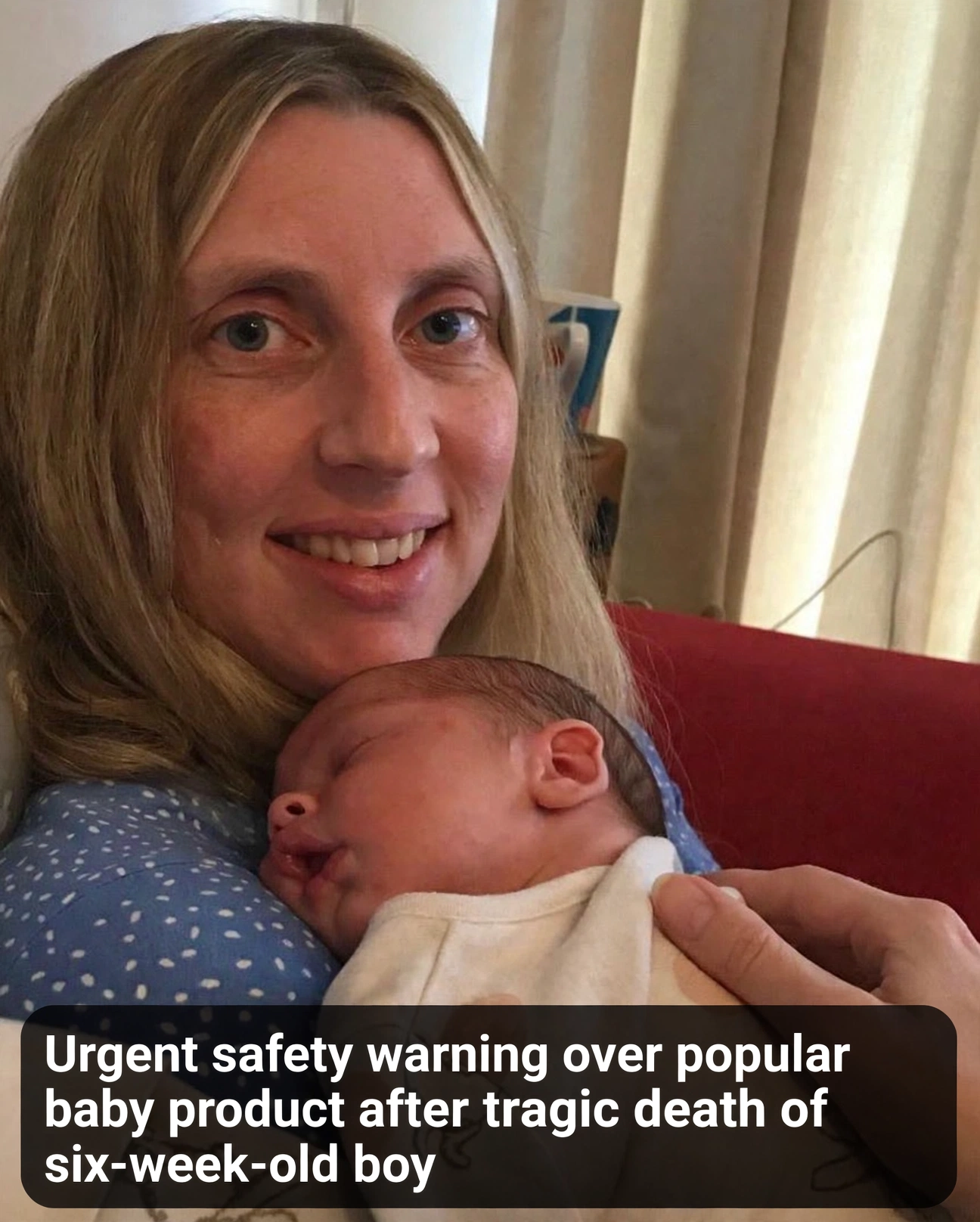
A new warning about carrying babies in slings and carriers has been published, after the death of a baby who was only six weeks old. The advice represents the most significant update to babywearing guidance in sixteen years, and it follows a long campaign by the child’s parents for clearer information.
The baby at the centre of the case was Jimmy Alderman, who died in October 2023. He was six weeks old when he stopped breathing while being carried in a sling. His mother, Ellie, had been feeding him in the carrier when he fell asleep. Shortly afterwards, she realised he was no longer breathing. Help began immediately, but Jimmy died in hospital three days later.
An inquest into his death concluded that parents had not been given sufficiently clear instructions about how to use slings and baby carriers safely. The hearing heard that the available advice was not easy to find, understand, or follow, and that this gap had left families without the information they needed at a time when they were caring for a very young baby.
In response, new guidance has now been produced. It is intended to give parents simple, practical checks they can use every time they carry a baby, and to make safe babywearing easier to remember. Jimmy’s parents have supported the work, describing it as an important first move towards better safety standards, while also saying that more still needs to be done.
The guidance was developed using research into slings and carriers carried out by the Durham Infancy and Sleep Centre. That work was funded by The Lullaby Trust and by Teddy’s Wish, a charity that supports families after the loss of a baby. The two organisations have worked together to turn the research into advice that can be shared widely with parents, midwives, and health visitors.
It focuses on three main checks. First, the baby should be held high on the firm part of the chest, close enough for the parent to kiss the top of the head without difficulty. Second, the baby’s mouth and nose should remain visible at all times, so breathing can be checked easily. Third, the sling should hold the baby firmly against the parent’s body, with the back evenly supported and the baby held upright rather than curled forward.
Those points build on existing advice known as Ticks, which already encourages parents to keep a baby tight, in view at all times, close enough to kiss, with the chin off the chest, and with a supported back. Jimmy’s parents said they had not come across that advice before the inquest, and they believe it should be much better known. They want new parents to receive clear, straightforward information as a matter of routine, rather than having to search for it themselves.
George and Ellie Alderman, who live in Weybridge in Surrey, explained that the carrier they had used came from a well-known brand and had originally been bought for their older son. They said they had trusted it because of that reputation. Ellie also said the instructions that came with it had suggested that feeding while carrying was possible without using hands, and that charities now warn that this is not safe. In her view, the instructions had been misleading, and that was deeply worrying to discover after the event.
Jimmy’s father said the company’s website had previously included a section answering questions about whether hands-free feeding was possible in the carrier, and that the answer given had been yes. Since Jimmy’s death, he said, that information had been removed from the site altogether. For the family, that change underlined how little regulation there had been around what manufacturers could claim.
The couple also said they had been told not to wear the sling too tightly, but had since learned that a carrier that is too loose can be dangerous in a different way. If the baby is not held firmly, the child can slump forward, which can make breathing more difficult. That detail, they said, showed why parents need advice that is both accurate and easy to follow, rather than short warnings that can be misunderstood.
The Lullaby Trust has produced new graphics to help parents remember the safe checks, and it plans to share downloadable cards, posters, and material for social media with midwives and health visitors. Its chief executive, Jenny Ward, said the charity had decided to act because it saw that babies were at risk, and that it had a responsibility to respond. She also urged anyone buying a sling or carrier, particularly in the run-up to Black Friday sales and Christmas, to check that British Standards are met and to read the manufacturer’s guidance on suitability for a baby’s weight, height, and age.
Ellie said the family wants clear, useful information to be given to all new parents when they leave hospital after giving birth, so they do not have to rely on finding it for themselves. She said the new material was clear and easy to follow, and that the use of diagrams meant it could be understood even by people who struggle with reading. She and George also hope the guidance will become a standard part of antenatal classes.
Jimmy’s father said the family sees the new guidance as a positive change, but only as a first step. He said the next thing they would like to see is a proper safety standard or form of regulation that applies to every sling and carrier on sale. For now, they are continuing to campaign for clearer guidance, in the hope that other families will not face the same loss they did.